

Learning the Human Side of Leadership: Inside ABB HR Leader Pratik Shah's Talk
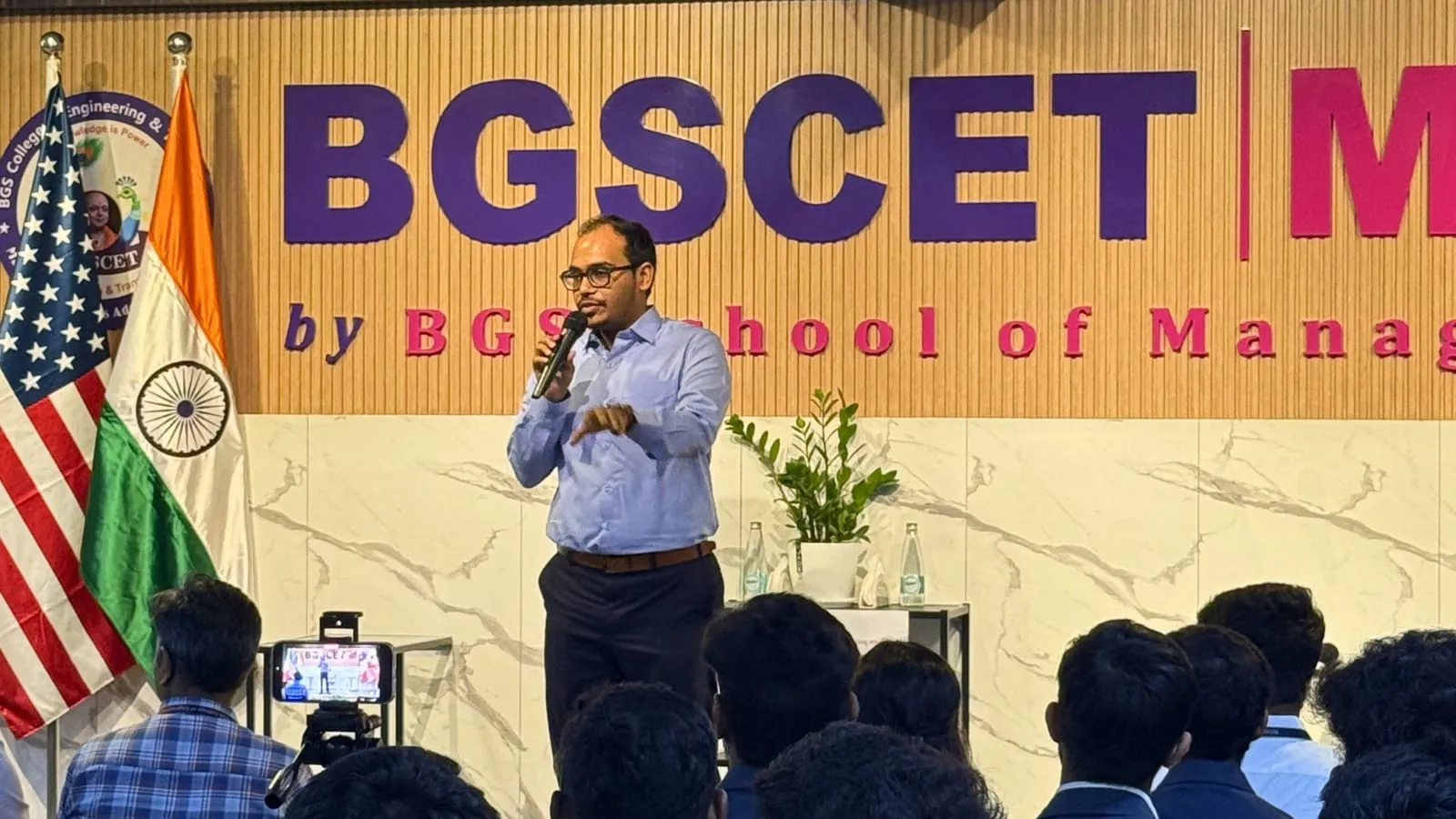
Why a session on talent management and the employee life cycle reframed leadership as an act of influence, not authority.
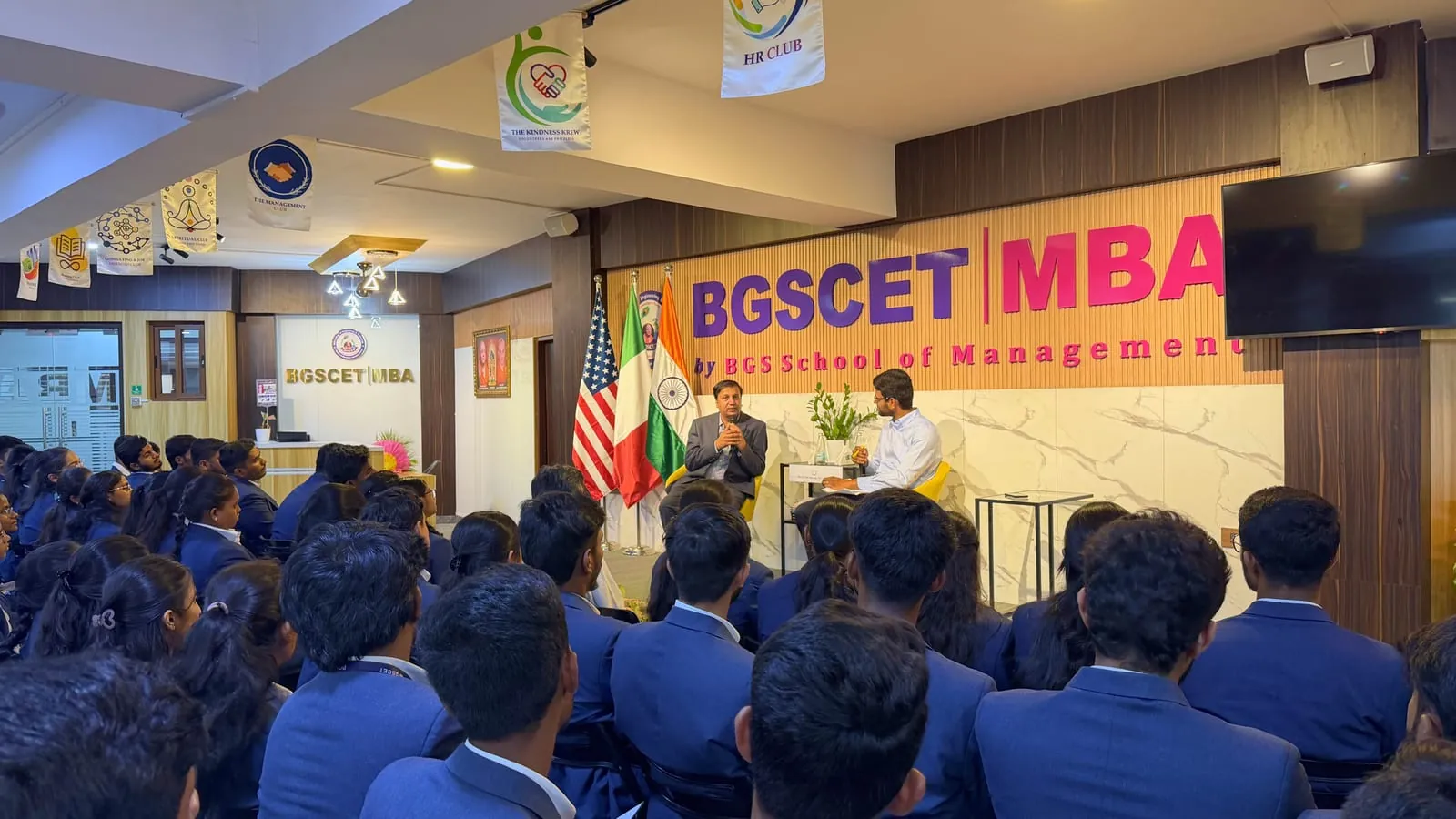
Leadership is most often discussed through the lens of strategy, decision-making, and the pursuit of organizational goals. Yet a recent leadership talk delivered by Mr. Pratik Shah H, an HR Leader at ABB, offered BGSCET MBA students a refreshing and necessary corrective to that view — one centered on the idea that what truly drives organizational success is people. Drawing on extensive experience in talent management, the employee life cycle, and human resources leadership, Mr. Shah delivered a session that was as practical as it was inspiring, leaving students with a far more nuanced understanding of what effective leadership demands in today's dynamic workplace.
For an MBA program committed to industry-aligned learning, sessions like this exemplify why direct engagement with senior HR practitioners remains essential to producing well-rounded, people-first business leaders.
Leadership as Influence, Not Authority
Among the most resonant ideas from the session was Mr. Shah's assertion that effective leadership is not a function of positional authority, but of influence and impact. Great leaders, he explained, are defined by their ability to create environments where employees feel valued, motivated, and empowered to perform at their best. This reframing challenges a common assumption among early-career professionals — that leadership is something conferred by title or hierarchy — and instead positions it as a daily practice rooted in trust-building and empowerment.
Leadership is not about managing people — it is about inspiring them to become the best version of themselves.
According to Mr. Shah, leadership begins with a genuine understanding of people: recognizing individual strengths, identifying growth opportunities, and actively supporting both the professional and personal development of those one leads. For MBA students preparing to step into managerial roles, this perspective offers a more sustainable and human-centered framework for leadership than the purely results-driven models often emphasized in traditional business education.
The Employee Life Cycle: A Strategic Lens on People Management
A significant portion of the session was devoted to the concept of the employee life cycle — the journey an employee undertakes from recruitment and onboarding through development, retention, and career progression. Mr. Shah explained how each stage plays a distinct and crucial role in shaping the overall employee experience, and how organizations that intentionally manage every phase of this cycle are far more likely to build engaged, high-performing, and loyal teams.
This discussion carries direct relevance for MBA students across specializations, not just those focused on human resources. Understanding the employee life cycle equips future managers, marketers, and operations leaders alike with a clearer picture of how talent strategy intersects with broader organizational performance. A poorly managed onboarding process, for instance, can quietly undermine productivity and retention long before its effects become visible in performance metrics — a lesson with implications far beyond the HR function alone.
Continuous Learning as a Leadership Imperative
Another central theme of the talk was the growing importance of continuous learning and adaptability in a rapidly evolving business landscape. Mr. Shah encouraged students to embrace a mindset of learning, unlearning, and relearning — a philosophy increasingly essential as industries face accelerating technological disruption and shifting workforce expectations.
He urged students to remain curious, to actively seek out challenges, and to view every professional experience, successful or otherwise, as an opportunity for growth. For MBA students preparing to enter competitive and fast-changing industries, this message reinforces a critical truth: technical knowledge alone is insufficient without the adaptability to apply, revise, and expand that knowledge as circumstances change.
Real-World Insight Over Theoretical Abstraction
What distinguished this session from a conventional classroom lecture was its grounding in real-world experience. Rather than relying solely on HR theory, Mr. Shah drew directly from his own professional journey at ABB, illustrating how leadership and talent management principles translate into practice within a large, global organization. His insights into talent development and people management offered students a realistic and unfiltered view of the challenges and opportunities faced by modern organizations — the kind of authentic, experience-based learning that case studies and textbooks can rarely replicate.
This emphasis on applied insight reflects a broader pedagogical philosophy increasingly embraced by MBA colleges in Bangalore: that genuine industry exposure, delivered directly by practicing leaders, produces a depth of understanding that theoretical instruction alone cannot achieve.
Why People-Centric Leadership Matters for Future Managers
As organizations across industries continue to grapple with talent shortages, rising attrition, and shifting employee expectations, the ability to lead with empathy, trust, and a genuine investment in people development has become a defining differentiator for successful managers. Sessions like Mr. Shah's leadership talk equip MBA students with exactly this capability — moving them beyond a transactional understanding of management toward a more strategic, people-centric leadership philosophy.
For prospective MBA aspirants evaluating institutes in Bangalore, the presence of such targeted, expert-led sessions on talent management and human-centered leadership should be regarded as a meaningful indicator of an institute's commitment to producing graduates equipped not just with business acumen, but with the interpersonal and organizational sensitivity that today's workplaces demand.
Conclusion: Inspiring People to Become Their Best
The leadership talk by Mr. Pratik Shah H offered BGSCET MBA students an enriching and broadened understanding of leadership and human resource management. It reinforced a powerful underlying truth: successful organizations are built not by leaders who simply manage people, but by those who prioritize trust, foster genuine engagement, and inspire continuous growth.
As one student reflected following the session, leadership is not about managing people — it is about inspiring them to become the best version of themselves. For BGSCET MBA students preparing to lead teams, departments, and eventually organizations of their own, that lesson may prove to be among the most valuable takeaways of their entire MBA journey.