

Cooking Up Real-World Skills: How Students Turned Swadothsav into a Masterclass in Management
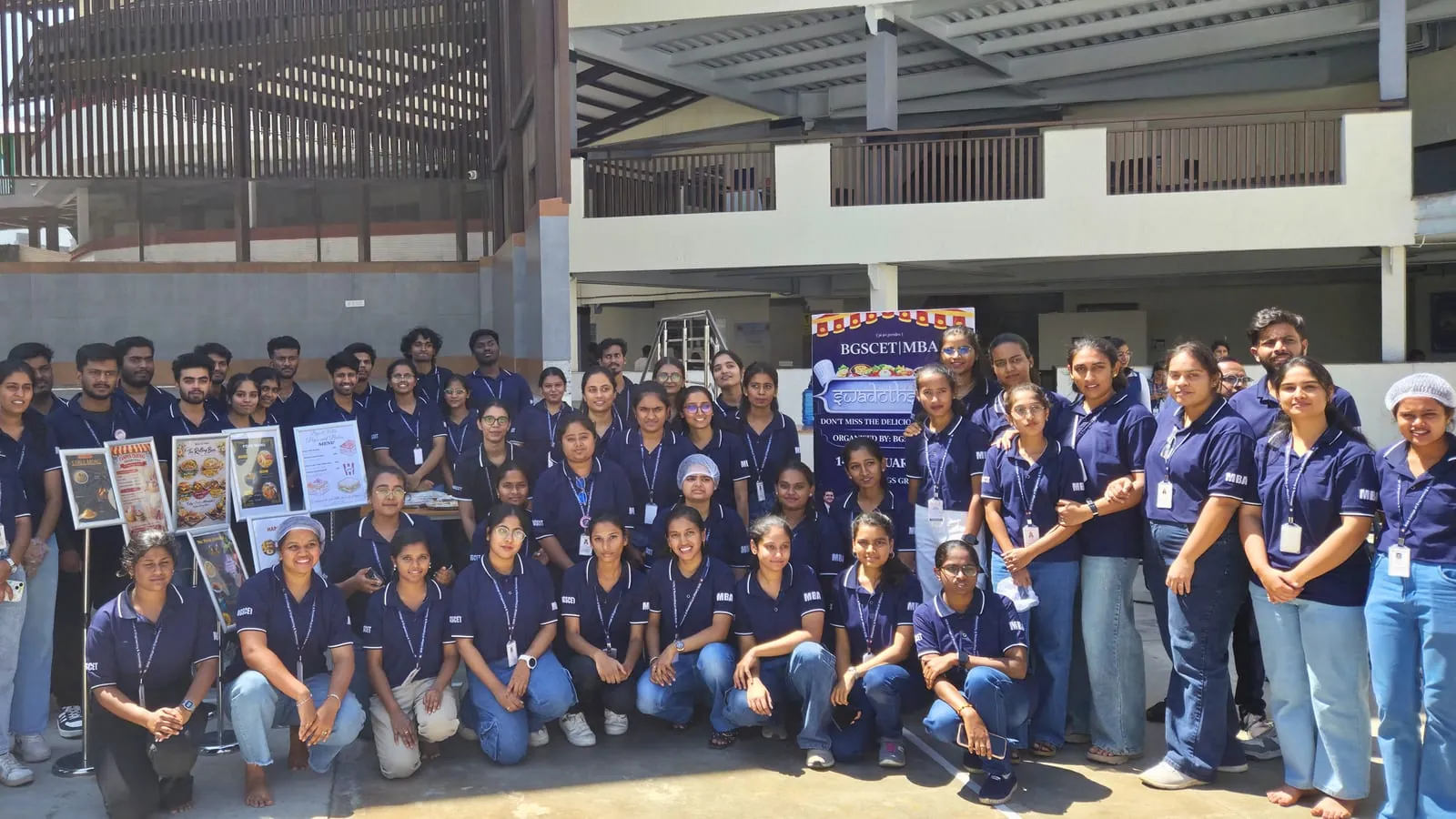
Hosting a 1,500-guest food festival end-to-end taught student organizers more about teamwork, sustainability, and crisis management than any classroom ever could.
Few experiences test the practical application of management theory quite like organizing a large-scale public event from the ground up. For BGSCET MBA students, that test arrived in the form of Swadothsav — a student-run food festival that welcomed approximately 1,500 guests and showcased a diverse menu of healthy, homemade dishes prepared entirely from scratch. What unfolded over the course of the event was far more than a culinary showcase. It was a comprehensive, hands-on demonstration of operations management, sustainable hospitality, financial discipline, and crisis response — the very competencies that define successful business leaders.
For an institute committed to experiential learning, Swadothsav stands as a powerful illustration of why student-led events have become indispensable to industry-relevant MBA education in Bangalore.
Months of Planning: Operations Management in Practice
Long before a single dish was served, the success of Swadothsav was being engineered through months of meticulous planning. Student teams divided responsibilities across procurement, menu planning, budgeting, logistics, marketing, and sales — a structure that mirrors the cross-functional coordination required in any real-world business operation.
Procurement teams focused on sourcing fresh, locally available ingredients, a decision that simultaneously controlled costs and elevated taste quality. Students negotiated directly with vendors, compared pricing across suppliers, and carefully timed deliveries to avoid both shortages and waste. This process offered a direct, practical application of supply chain management principles — vendor negotiation, cost optimization, and inventory timing — concepts that are often taught in the abstract but rarely practiced with real stakes attached.
Menu planning, meanwhile, required balancing nutritional value with mass appeal. By offering vegetarian, vegan, and healthier interpretations of popular dishes, the team demonstrated an acute awareness of evolving consumer preferences — a skill directly transferable to product development and marketing strategy in any consumer-facing industry.
Turning Live Cooking into a Customer Experience
On the day of the event, the festival's live-cooking counters became more than functional kitchens — they became interactive stages. Students engaged directly with guests, explaining ingredients and exchanging recipe tips while preparing meals in real time. This transformed a simple transaction into a personalized experience, where guests felt they were watching friends cook for them rather than purchasing food from a vendor.
This approach reflects a sophisticated, if intuitive, understanding of experience-driven hospitality — a principle increasingly central to modern customer engagement strategy. For MBA students specializing in marketing or brand management, this hands-on demonstration of experiential customer interaction offers insights that align closely with contemporary thinking on customer journey design and brand loyalty building.
Crowd Management and Decision-Making Under Pressure
Running an event for 1,500 guests inevitably brings operational challenges, and Swadothsav was no exception. Entry flow, queue management, and clear signage were proactively designed to minimize wait times, while hospitality volunteers worked to keep lines moving and respond promptly to guest queries.
They cooked, they learned, and they laughed — together — and in doing so built management capabilities that no classroom lecture alone could deliver.
When unexpected issues arose — an equipment glitch, a sudden supply shortfall, or a surge in demand at a popular stall — the team's pre-assigned backup plans and rapid decision-making kept the festival running smoothly. This is precisely the kind of real-time problem-solving and contingency planning that management theory describes but rarely allows students to practice under genuine pressure. For MBA students, the ability to make sound decisions quickly, with incomplete information and real consequences, is among the most valuable and difficult-to-teach managerial competencies — and Swadothsav provided exactly that training ground.
Sustainability as a Visible, Operational Commitment
A defining feature of the festival was its commitment to being entirely plastic-free. Biodegradable plates, glass water dispensers, and clearly marked waste-separation points made sustainability a tangible, visible part of the guest experience rather than a footnote in event planning. Guests noticed and appreciated the effort — a reminder that sustainable practices, when implemented thoughtfully, can enhance rather than complicate the customer experience.
This focus on sustainable event management reflects a broader shift across industries, where Environmental, Social, and Governance (ESG) considerations are no longer optional add-ons but expected standards of responsible business operation. For MBA students, organizing a large-scale event with genuine environmental accountability provided direct, practical exposure to sustainable hospitality practices — a skill set increasingly valued by employers across the events, hospitality, and consumer goods sectors.
Financial Discipline Without Compromising Quality
Behind the scenes, the festival's organizers ran a tight financial operation. Real-time expense tracking and transparent cash handling ensured the event stayed within budget, all without compromising on the quality or taste of the food served. This financial discipline illustrates a core principle of effective business management: that cost control and quality delivery are not mutually exclusive when supported by careful planning and transparent processes.
For students pursuing specializations in finance or operations, this experience offered a rare opportunity to apply budgeting and expense management principles in a live setting, with real money, real vendors, and real accountability.
Why Experiences Like Swadothsav Matter for MBA Education in Bangalore
As Bangalore continues to establish itself as a leading hub for industry-integrated management education, experiential platforms like Swadothsav demonstrate why hands-on event management deserves a central place in the MBA curriculum. Hosting a large-scale public event requires students to apply operations management, marketing, financial planning, sustainability practices, and crisis management simultaneously — under real time constraints and with real stakeholders to satisfy.
For prospective MBA aspirants evaluating institutes in Bangalore, the presence of such immersive, student-led initiatives should be viewed as a meaningful indicator of an institute's commitment to producing graduates who are not just academically capable, but operationally ready to lead in hospitality, events, retail, and beyond.
Conclusion: More Than a Festival — A Living Case Study in Management
Swadothsav was, at its core, a warm reminder of what a college community can accomplish when given the autonomy and responsibility to execute a vision from start to finish. Guests left with full plates and conversations about recipes; students left with real-world experience in hospitality, negotiation, sustainability, and crisis management.
For BGSCET MBA students, the festival was never just about food — it was a living case study in business management, executed not on paper, but in front of 1,500 guests who left both satisfied and impressed. As the saying goes among this year's organizing team: they cooked, they learned, and they laughed — together, and in doing so, built management capabilities that no classroom lecture alone could deliver.